RCP AUTOMOTIVE / PROJECT VEHICLES

TWO REAL VEHICLES. ONE QUESTIONABLE WORKSHOP.

THE
BUILD.

One luxury coastal resort disguised as a Mercedes-Benz Sprinter. One LandCruiser 79 Series with a modification list that has developed its own weather system.

Both are ours. One is completed and still evolving. The other is very much a work in progress.

RCP RESEARCH & DEVELOPMENT SCROLL TO EXPLORE ↓

THE PHILOSOPHY / 001

THE ONLY THING WE
CAN'T MODIFY IS OUR JUDGEMENT.

Officially, Kelvinator and Quest are our research and development vehicles. They're places to investigate difficult packaging decisions, suspension integration, electrical systems, protective coatings and the sort of problems no sensible person would create voluntarily.

Unofficially, we own the workshop, someone keeps leaving the accessory catalogues out, and the company credit card has stopped making eye contact.

Serious workmanship. Questionable restraint.These are genuine RCP company projects, not renderings or pretend customer builds.

Completed Kelvinator Mercedes-Benz Sprinter parked on white sand at the coast
PROJECT 01 / COMPLETE · UPGRADES CONTINUE

KELVINATOR ↗

Mercedes-Benz Sprinter / the five-star accommodation department

RCP Quest LC79 Toyota LandCruiser dual-cab in the workshop
PROJECT 02 / BUILD IN PROGRESS

QUEST LC79 ↗

Toyota LandCruiser 79 / the ongoing mechanical incident

FEATURE 01 / MERCEDES-BENZ SPRINTER

COMPLETED BUILD · CONTINUING UPGRADES

THE
KELVINATOR.

A six-inch-taller, 35-inch-tyred, Victron-fuelled, Hamptons-inspired beachfront apartment. With number plates.

Some people look at a Mercedes-Benz Sprinter and see a delivery van. We looked at one and wondered whether we could install enough equipment to make a medium-sized marina feel underprepared.

The plan was straightforward: build a capable, genuinely comfortable touring vehicle with none of the usual compromises. Somewhere during that conversation, the words “and while we're at it” became the most expensive four words in the workshop.

Kelvinator's major build is complete. That has not, unfortunately, stopped us improving it.
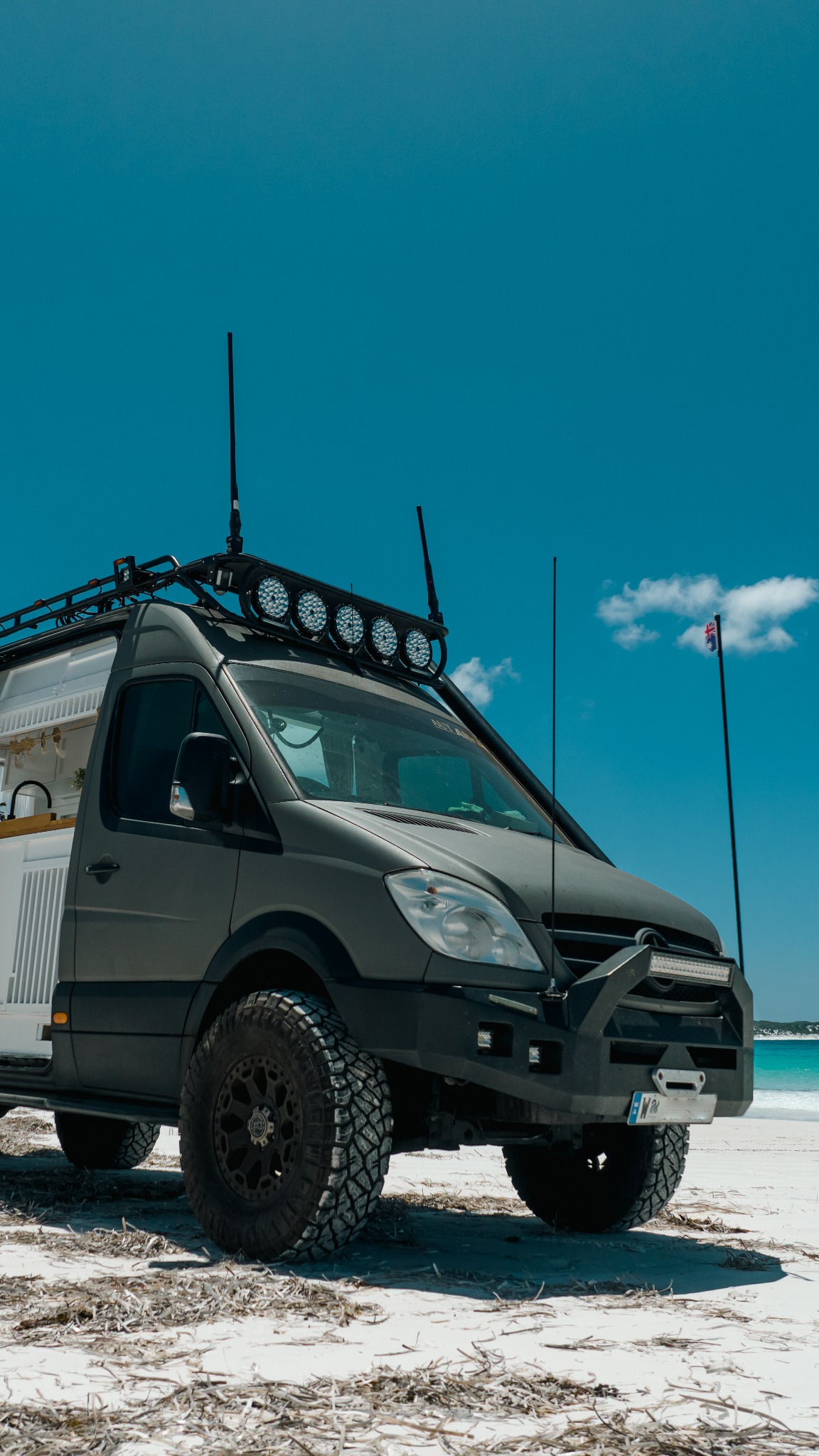
Front three-quarter view of the customised dark Mercedes-Benz Sprinter with off-road equipment
NOT YOUR AVERAGE DELIVERY VAN.

01 / THE EXTERIOR

AN APARTMENT
WITH GROUND CLEARANCE.

Underneath the holiday accommodation is a seriously modified Sprinter. The reported setup combines Van Compass suspension, customised coilover shocks by Wilco Suspension, 35-inch Nitto Grappler tyres and Black Rhino wheels. Its overall height is approximately six inches greater than standard. That's an overall height comparison, not a claim of six inches of suspension lift.

The aim was never to build something that merely looks aggressive in a shopping-centre car park. Suspension, tyre size, vehicle mass, ride behaviour and day-to-day usability all have to be considered together. Anyone can make a van taller. Making it work as a complete touring vehicle is the interesting bit.

From the outside, Kelvinator looks as if it's been sent to collect an overdue debt from a national park. Open the doors and things become rather more civilised.
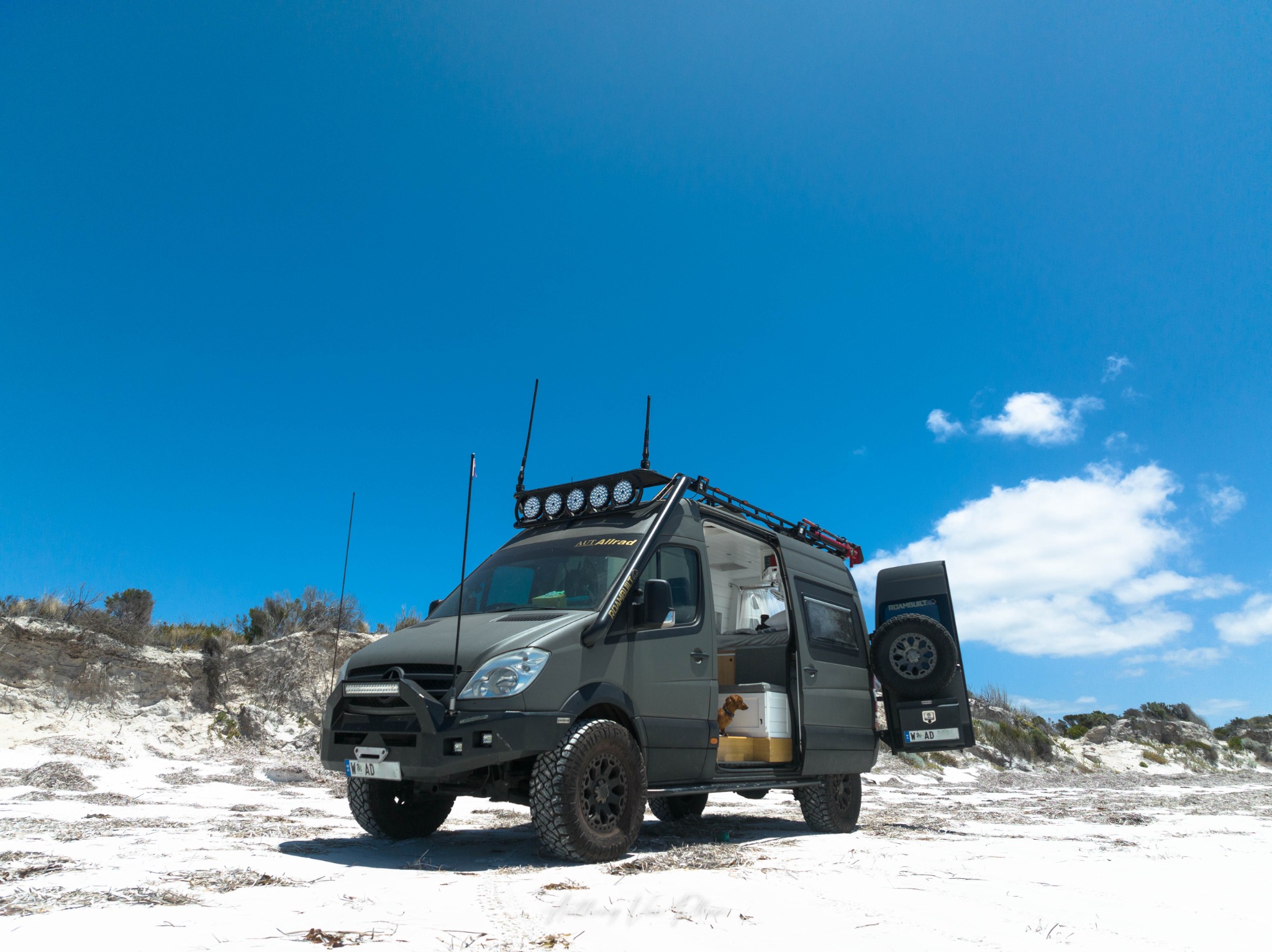
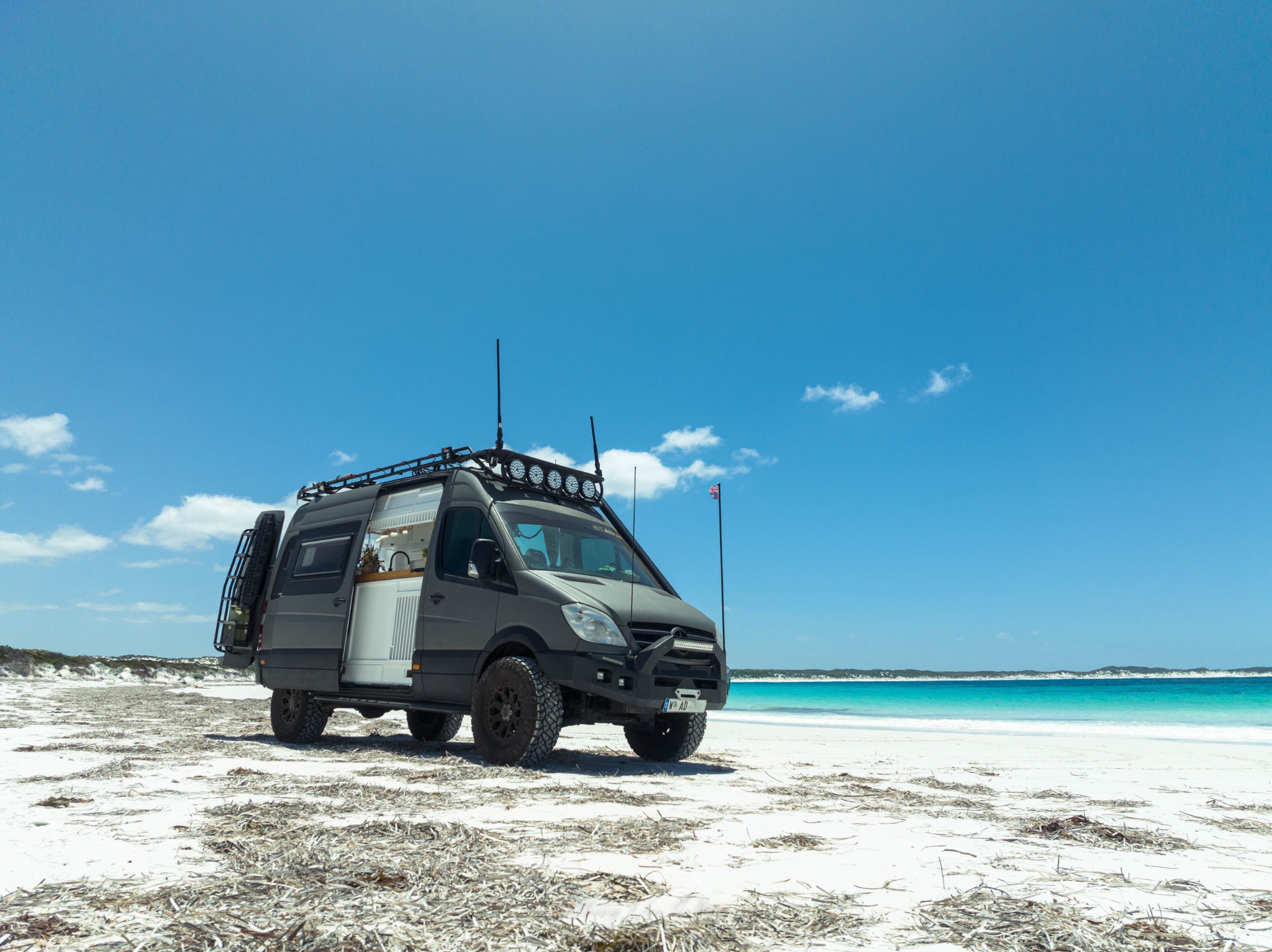
Side profile of the dark Sprinter on a Western Australian beach, showing wheels, tyres, roof equipment and open door
THE SIDE PROFILE / EQUIPMENT AND STANCE
Three-quarter view of the Sprinter with Black Rhino wheels and off-road tyres on the beach
THE THREE-QUARTER VIEW / THE SCALE OF THE THING

Photography documents the actual vehicle. Exact suspension geometry, approval details and operating limits are not being inferred from pictures.

02 / WESTERN AUSTRALIAN FIELD TESTING

THE BEST OFFICE
HAS NO WALLS.

There is something deeply satisfying about leaving the workshop and ending up beside a ridiculously blue stretch of Western Australian coastline. The van can take you there with the gear on board, and once you arrive it should feel like a destination rather than another problem to solve.

Of course, describing a seaside holiday as “field testing” has done wonders for our ability to justify the trip. The accountant has requested fewer photographs of the beach and more photographs of actual work.
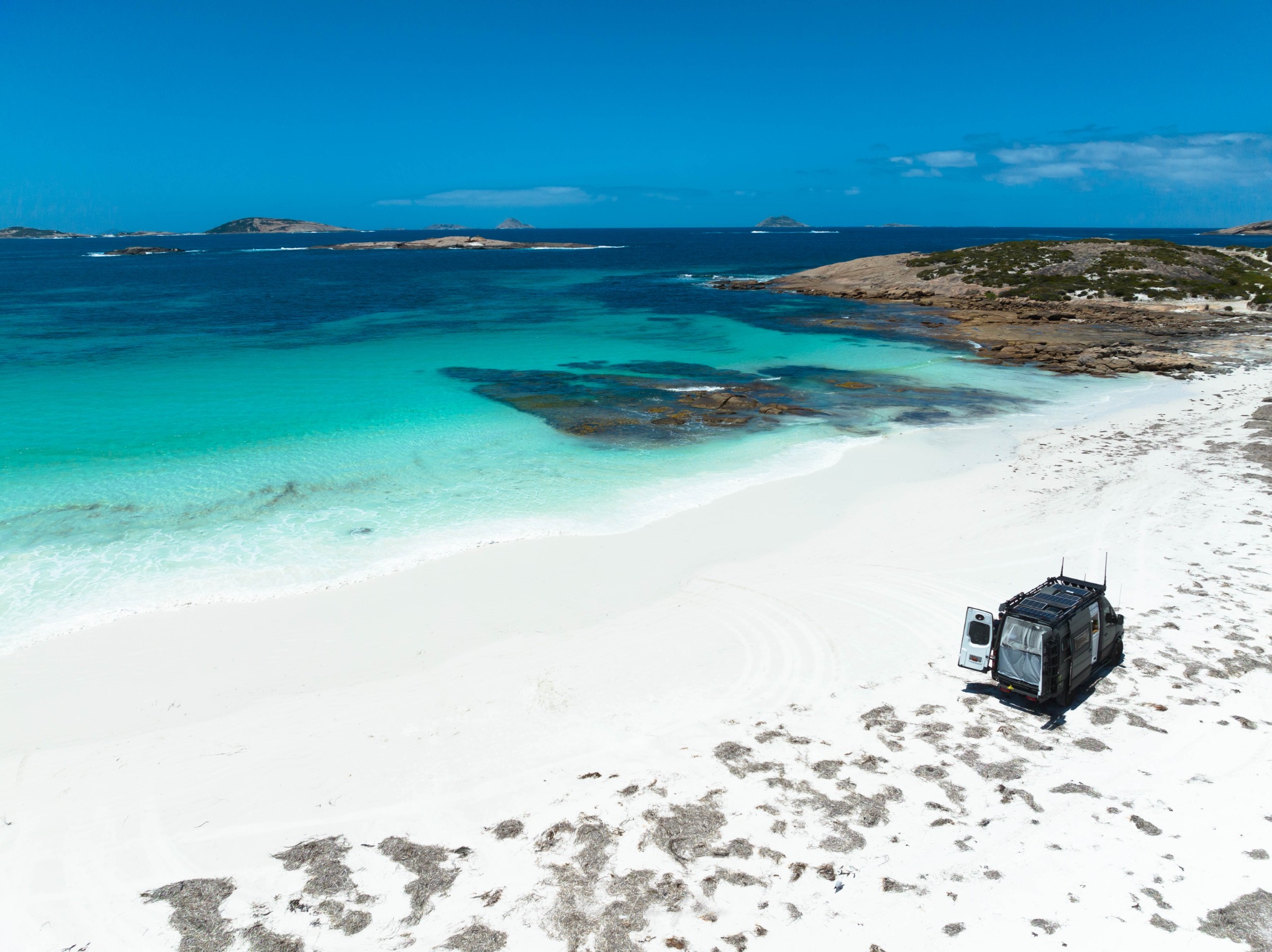
Wide elevated photograph of turquoise Western Australian water and Kelvinator beside the white sandy beach
WHEN THE DESTINATION IS THE POINT. WESTERN AUSTRALIA.

03 / THE HAMPTONS INTERIOR

OUTSIDE: OFF-ROAD EXPEDITION.
INSIDE: BEACHFRONT RESORT.

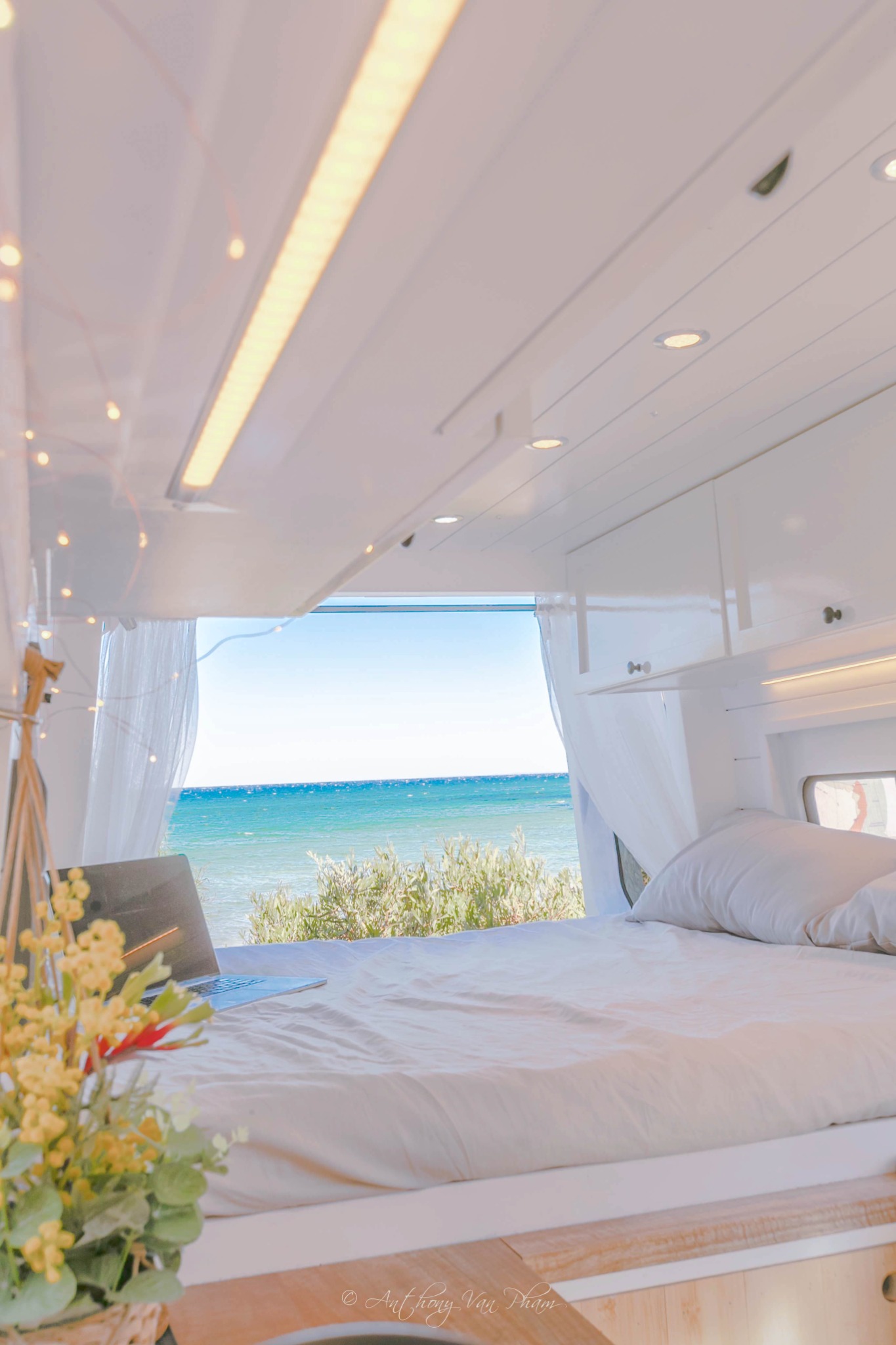
Most expedition vans lean into grey upholstery, dark cupboards and the atmosphere of a very expensive tool chest. We went the other way. White finishes. Warm timber. Natural light. A relaxed Hamptons-inspired interior that feels more coastal retreat than mobile command centre.
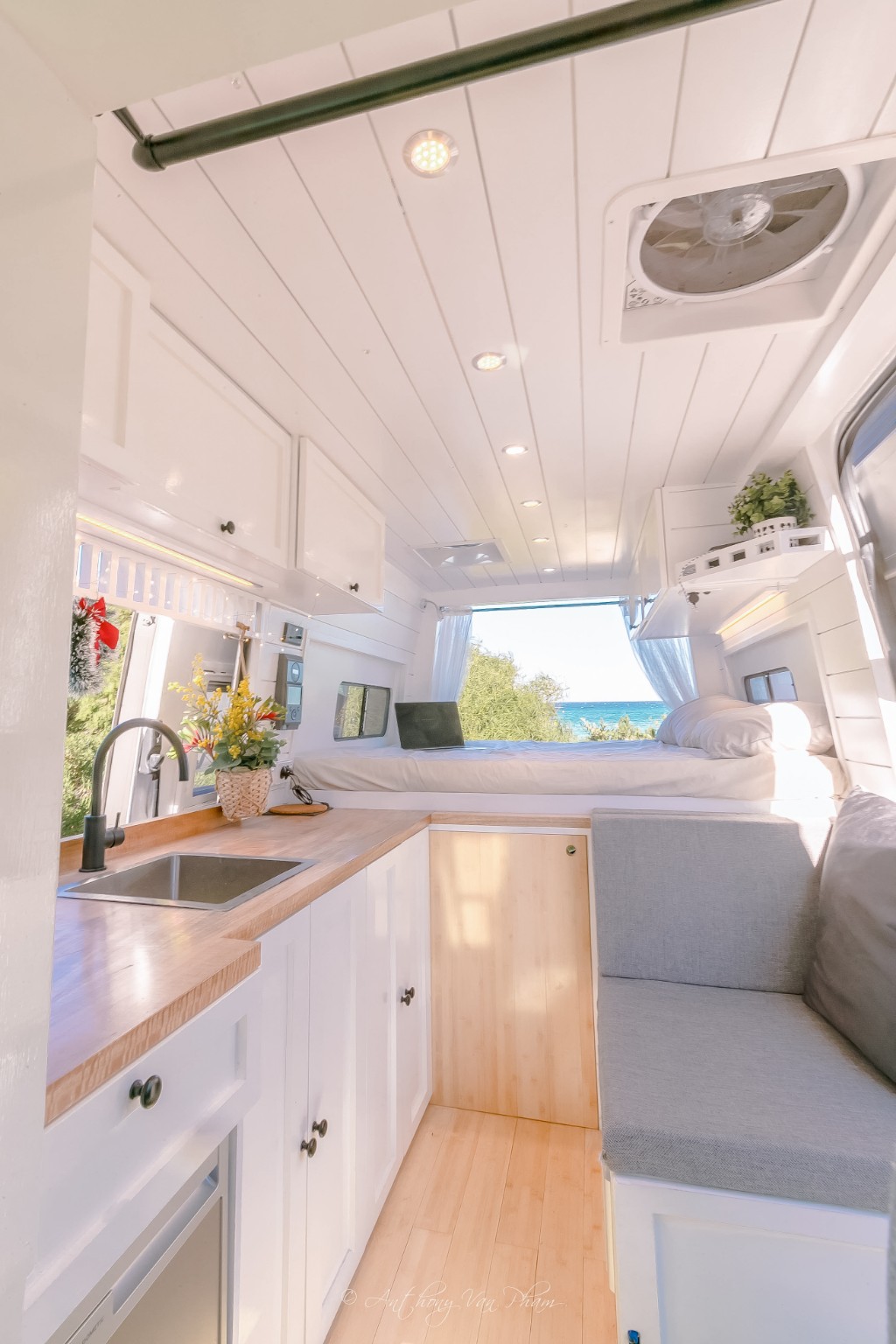
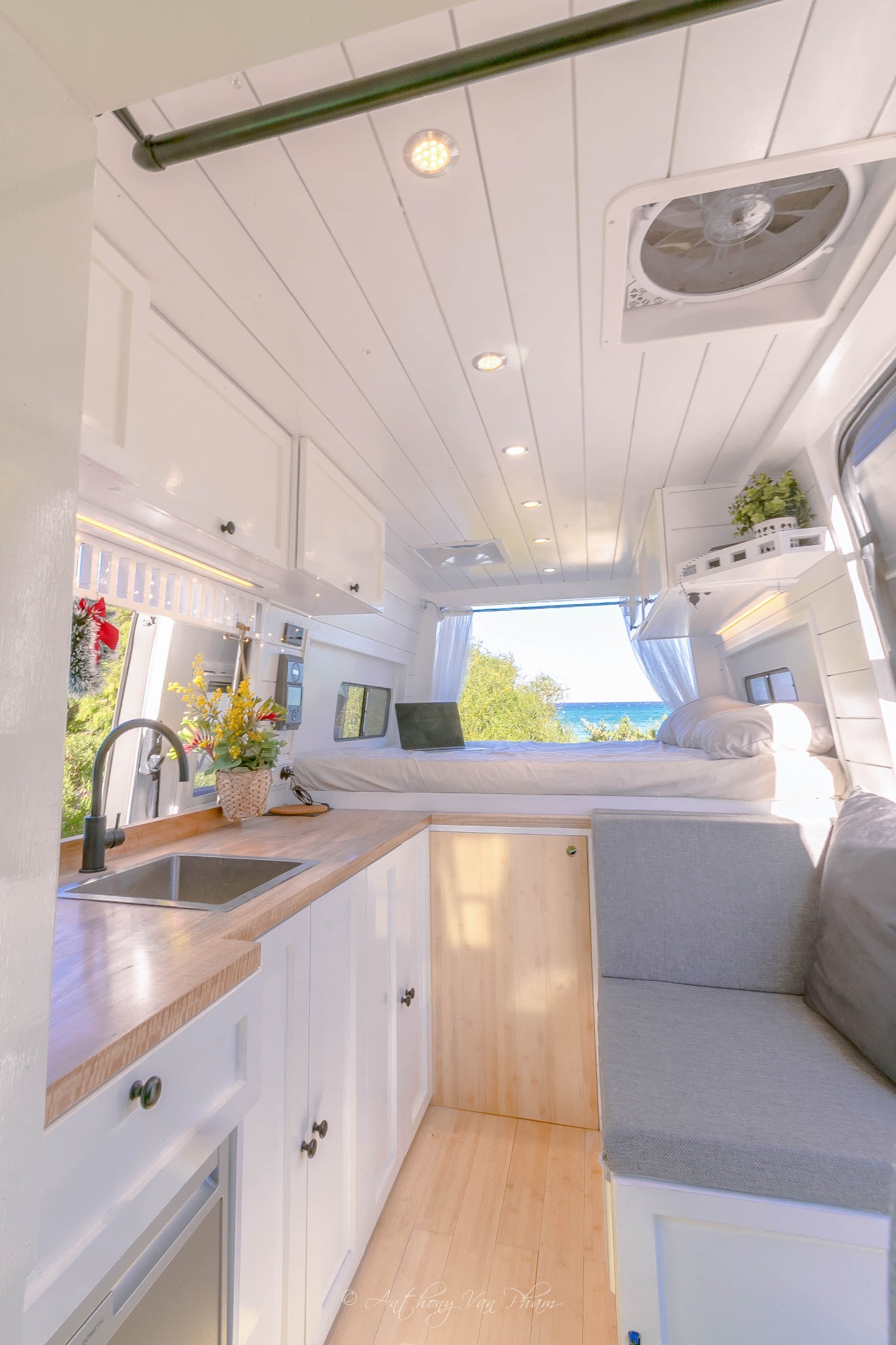
Bright white Hamptons-style Sprinter interior with natural wood countertops, kitchen sink, dining seat and rear bed
ACTUAL KELVINATOR INTERIOR / WARM TIMBER, WHITE JOINERY, NATURAL LIGHT
Light-filled Sprinter kitchen and accommodation with bed, white cabinetry and coastal views
THE KITCHEN AND LIVING SPACE
Hamptons-style Sprinter bedroom with a view of the ocean from the open rear area
THE PLACE WHERE THE MILEAGE FINALLY STOPS

TWO SLIDING DOORS. ONE VERY GOOD IDEA.

Kelvinator has sliding doors on both sides. Open them and the breeze moves through the cabin rather than getting trapped behind a wall of cabinetry. Park by the coast and you get the feeling of a little beach bungalow: light, air, views and enough comfort to make you forget you're living in a vehicle.

One side says “serious expedition vehicle”. The other says “would you like another coffee before we walk down to the water?” Apparently both can be true. We've checked. Extensively.

04 / ELECTRICAL ENGINEERING

SOMEBODY OPENED
THE VICTRON CATALOGUE.

It started with a sensible idea: create a reliable, well-integrated electrical system for extended touring. Then we opened the Victron catalogue. It turns out that browsing the catalogue while owning a workshop is roughly as financially responsible as letting a toddler loose in a lolly shop with the business credit card.

Dual solar MPPT controllers, dual DC-DC charging arrangements, two Victron Lynx distribution components and multiplex control form part of the reported system. Kelvinator currently has a 1,500Ah battery bank and approximately 700 watts of solar panels.

Those amp-hour figures describe battery capacity, not usable energy on their own. Without the confirmed system voltage and battery details, we're not inventing a kilowatt-hour number or a guaranteed number of days off-grid.

The electrical setup isn't a random collection of blue boxes. Every charging source, load, protective device and control has to work as a system. The challenge is fitting a great deal of hardware into a limited space while keeping access, isolation and maintenance practical.

And yes, it's an extensive installation. No, we are not claiming literally every product Victron has ever made is in there. The catalogue still has a few pages left. We've hidden them from management.
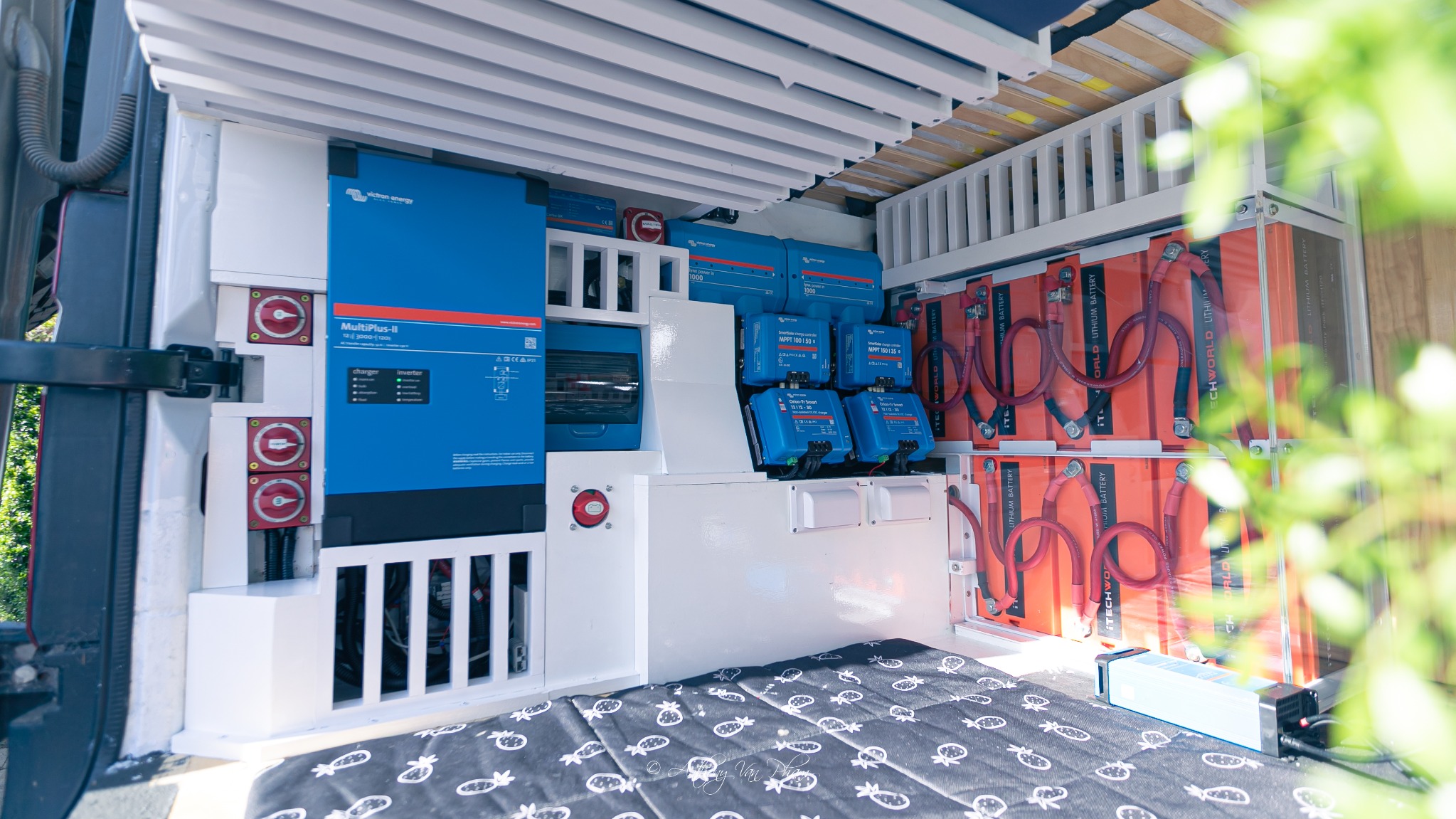
Photograph of Kelvinator electrical compartment with Victron MultiPlus-II inverter charger, controllers, distribution hardware and lithium battery modules
GENUINE EQUIPMENT PHOTO / VICTRON INSTALLATION AND BATTERY COMPARTMENT
BATTERY BANK / REPORTED CURRENT1,500Ah
ROOFTOP SOLAR / APPROX.700W

In normal use, it's been remarkably difficult for us to exhaust the battery bank. That's our experience, not a formal endurance test or a promise of infinite electricity. We've tried using the comforts on board rather enthusiastically. The system keeps reminding us that we may have taken the specification slightly too far.

There's probably a limit. Knowing us, we'll buy something to find it.

05 / CREATURE COMFORTS

ROUGH IT?
ABSOLUTELY NOT.

Air conditioning. Induction cooking. Microwave. Hot water. Entertainment and subwoofers. Surveillance cameras. Starlink. Mobile signal boosters. A long-range tank, extensive lighting and all the little conveniences that somehow become essential the moment you've tried them.

One minute you're discussing suspension geometry. The next you're debating whether the kitchen needs another appliance. This is how a touring project turns into a Hamptons home that happens to require tyre pressures.

We've reached the point where the only major creature comfort missing is a spa. We're considering it. Not as an approved modification, you understand. Just an entirely innocent exercise in measuring the available space.

06 / COATINGS & WORKSHOP DEVELOPMENT

THE VAN THAT
OUTGREW THE SHED.

Kelvinator received its RAPTOR protective coating before RCP had a dedicated spray booth sized for vehicles of this scale. Coating something this large makes the limits of your facilities very obvious, very quickly. The experience contributed to the decision to invest in larger spray-booth capability.

That's what these development vehicles are good for. A real project exposes real constraints: access, surface preparation, handling large panels, installation sequence and all the details that become obvious only when you're actually doing the work.

The workshop learns. The equipment improves. The company credit card quietly moves to another state.
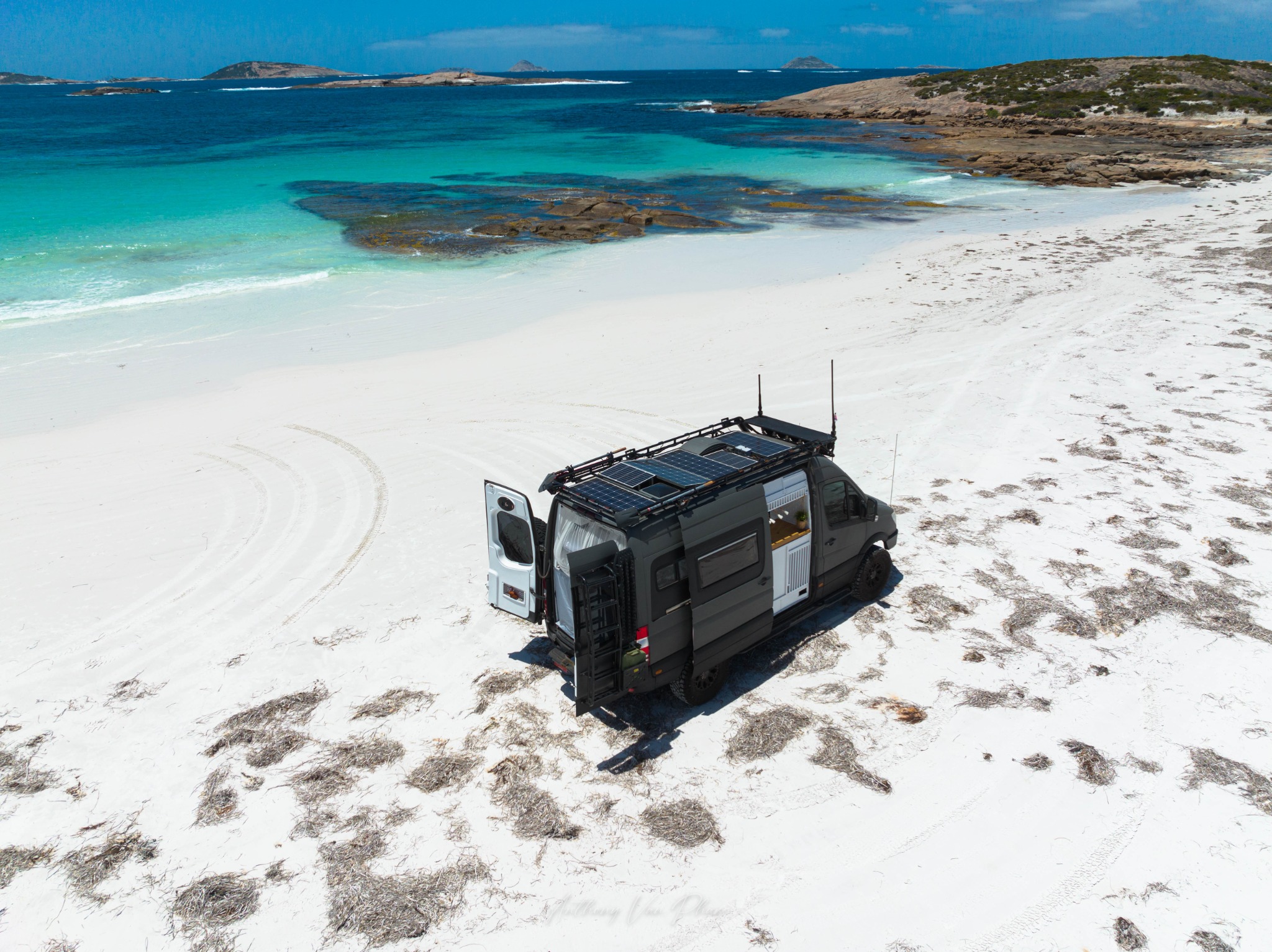
RAPTOR-coated custom Mercedes-Benz Sprinter on the beach showing its dark exterior finish
THE EXTERIOR FINISH / THE ACTUAL VEHICLE
Aerial perspective of Kelvinator on a white beach near brilliant blue coastal water
DEVELOPMENT NEVER REALLY STOPS.

07 / WHAT'S NEXT?

FINISHED.
UNTIL WE CHANGE OUR MINDS.

The major Kelvinator build is complete. Its electrical system is still evolving, and another exterior colour change is planned. The next colour stays under wraps for now. We'll share it when the work is actually done.

Officially, this is a company vehicle, a technical research platform and a perfectly legitimate workshop investment.

The occasional trip to a spectacular beach, with every conceivable comfort close at hand, is purely a coincidence. There is a budget. We just haven't told the missus what it is yet.

ASK US ABOUT RELEVANT WORKSHOP SERVICES ↗

FEATURE 02 / TOYOTA LANDCRUISER 79 SERIES

BUILD IN PROGRESS

QUEST
LC79.

THE FARM TRUCK ON STEROIDS ISN'T FINISHED YET.

Kelvinator is the luxury coastal resort. Quest is what happens when the workshop looks at a Toyota LandCruiser 79 Series Dual Cab and asks, “How far can we actually take this?”

This ongoing development vehicle is focused on four-wheel-drive capability, mechanical integration, suspension, vehicle systems and the relentless puzzle of fitting one more thing without creating three new problems.

Some people build rigs like this because their pockets are deeper than their brain cells. Ours aren't especially deep. The brain-cell situation is still under investigation. But we do own the workshop, which appears to be enough justification to keep going.

Current status: in progress. Planned equipment, future modifications and development goals are not presented as completed or tested installations.

WHAT WE LEARN FROM BOTH PROJECTS ↓
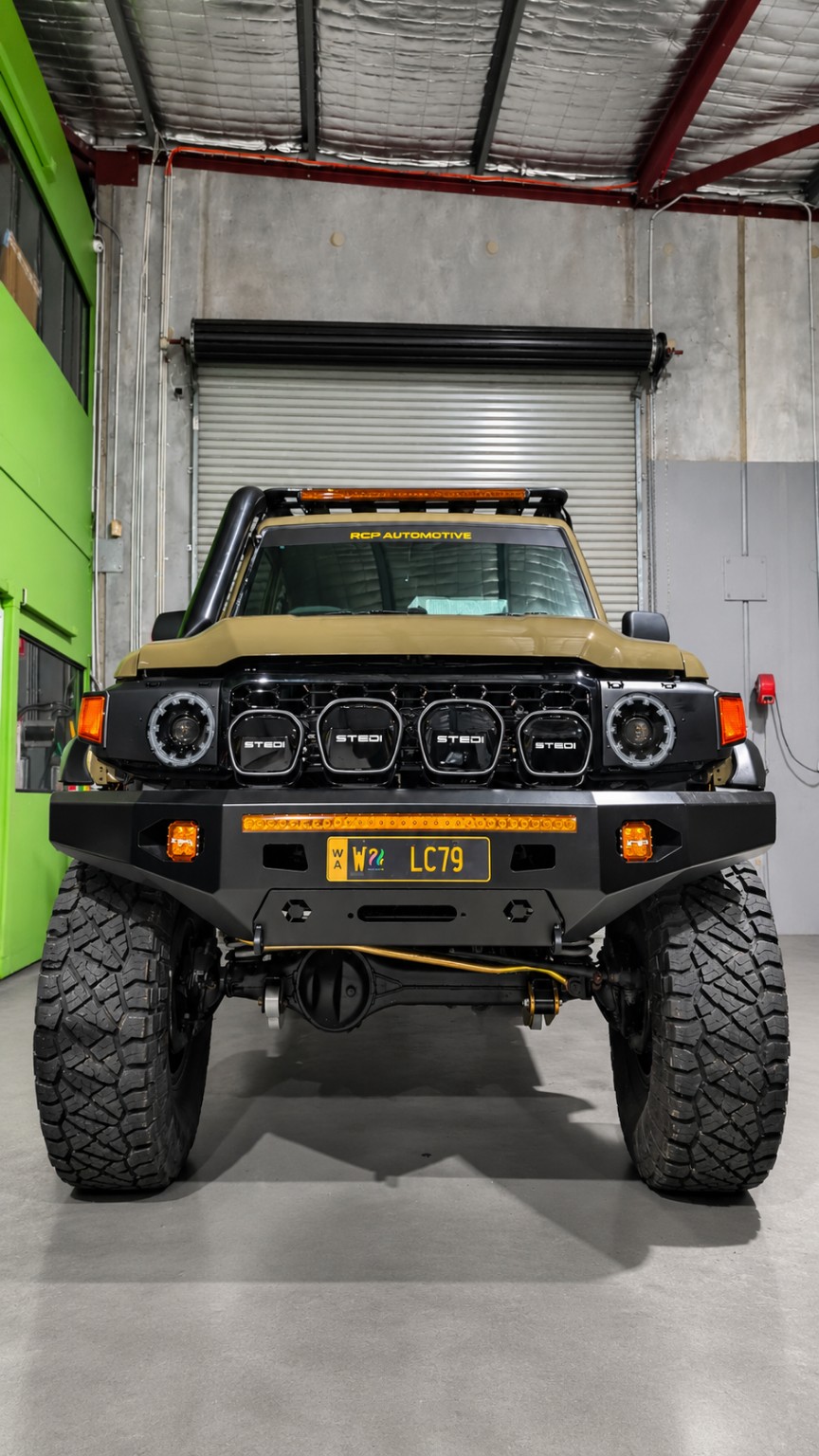
Quest LC79, RCP's in-progress LandCruiser 79 Series dual-cab development vehicle photographed in the workshop
QUEST LC79 / IN DEVELOPMENT — REAL VEHICLE, REAL WORK IN PROGRESS
QUEST LC79 / PROJECT DEVELOPMENT FILM

QUEST LC79 / THE CONTINUING DEVELOPMENT FILE

A FARM TRUCK ON STEROIDS.
THE ACCOUNTANT IS NOT AMUSED.

Some people modify a LandCruiser because they need more capability. Some do it because they've spent too long browsing the accessories catalogue. We're doing both, with the added complication that we own a workshop and nobody has worked out how to confiscate the keys.

Quest is our Toyota LandCruiser VDJ79R dual cab, pre-facelift. It's an active development project, not a completed demonstrator. Some parts are installed, some are acquired, and others are ideas waiting for a workshop bay. We'll tell those apart rather than treating a shopping list as an engineering certificate.

01 / WHY QUEST EXISTS

THE PROBLEM WITH OWNING A WORKSHOP

Most sensible people buy a four-wheel drive, fit the essentials and disappear for a weekend. We began with the same basic plan. Then the first modification suggested another, which suggested another, and by the time anyone checked the budget the vehicle had become a rolling research program.

It's a practical platform for trying ideas about suspension, mechanical integration, electrical packaging and how to carry useful equipment without making the vehicle impossible to service. It also demonstrates a deeply concerning inability to say, “That's probably enough.”

02 / SUSPENSION

FIVE INCHES OF VERY EXPENSIVE OPTIMISM

Quest's recorded suspension configuration centres on a Superior Engineering lift of approximately five inches, adjustable remote-reservoir dampers, upgraded springs, arms and associated steering hardware. The aim isn't simply to park higher than everyone else at Bunnings. Suspension modifications alter geometry, behaviour and loads throughout a vehicle.

Each setup needs to be evaluated as a system: spring selection, damping, articulation, steering, tyre clearance and the practical compromises of daily use. An imposing stance makes a good photo. Correctly engineered behaviour is the part that matters once the road becomes interesting. We don't claim formal approval or test results we haven't documented.

03 / WHEELS & TYRES

WHEN THE TYRES NEED THEIR OWN POSTCODE

The recorded wheel-and-tyre combination is 37 × 13.50R17 Nitto Ridge Grapplers on Method Race Wheels MR106 genuine beadlocks. Project records list the wheels as 17 × 9 with a 5 × 150 stud pattern and −44 offset. The final custom wheel-finish colour still needs confirmation.

Big tyres affect far more than appearance: gearing, braking demand, steering behaviour, clearances and component loads all come into the conversation. That's why these details belong in a real development log, not a boast about having the biggest rubber in the car park. Besides, the car park is already having enough trouble accommodating it.

04 / ORIGINAL RCP COLOUR

A COLOUR THAT DOESN'T COME FROM A CATALOGUE

When it came to painting Quest, we could have selected a colour straight from a manufacturer's catalogue. That would have been straightforward. Sensible, even.

Naturally, we decided against it.

Instead, we developed and mixed our own custom colour in-house, specifically for this LandCruiser. The result is a distinctive finish created to complement Quest's proportions, aggressive stance and increasingly unreasonable collection of modifications.

It's not a factory colour. It's not somebody else's paint code. It's an RCP Automotive original.

Because apparently choosing a colour wasn't complicated enough. We had to develop one ourselves.

05 / LIGHTING

WE'RE NOT AFRAID OF THE DARK. THE DARK IS AFRAID OF US.

The lighting development register includes two STEDI Type-X EVO 8.5-inch driving lights, two 7-inch lights, a STEDI 31.5-inch slimline bar, a pair of C4 LED cubes and a Hardkorr Hyperion 40-inch white/amber DRL bar. Additional work lights, amber markers, relays and switching arrangements are also part of the development plans.

Not every item in that register is confirmed fitted. Installing lighting correctly also means considering circuit protection, cable routing, switching and road-use requirements, not merely locating another piece of empty roof rack. We are very good at finding empty spaces. Unfortunately, so is the accessories catalogue.

06 / MECHANICAL & DRIVETRAIN

BECAUSE STOCK WASN'T ENOUGH TROUBLE

Mechanical development is another live chapter. G-Turbo, Manta Performance and PDI Performance Diesel Intercoolers appear in the project records alongside cooling, exhaust and drivetrain integration. Those references describe the development ecosystem, not verified horsepower figures or a statement that every listed component has been installed.

The interesting work is understanding how changes influence each other: cooling requirements, drivability, service access and the reliability needed from a vehicle intended to go well beyond the workshop doors. Spectacular numbers are easy to put on a sticker. Living with the result is the actual test.

07 / ELECTRICAL ARCHITECTURE

ANOTHER VICTRON CATALOGUE INCIDENT

Kelvinator already taught us that sophisticated vehicle electrical systems demand planning. We responded to that lesson by beginning another one. Quest's electrical development records include Victron Lynx Power In M10, SmartShunt, SmartSolar MPPT, MultiPlus-II planning, lithium storage, solar charging, monitoring and fused distribution.

The system design prioritises protection, weather-resistant roof entry, tidy routing and access for maintenance. Some components are purchased or specified, but their installation status and final ratings have not all been confirmed. We are not inventing a battery capacity, system voltage or inverter specification simply because a blue box looks handsome in a photograph.

08 / ROOF PLATFORM

ROOF SPACE: THE WORLD'S SMALLEST REAL ESTATE MARKET

The roof planning starts with a Rhino-Rack Pioneer 6 platform and Backbone system. The recorded platform size is 900 × 1430 mm. That real estate must be shared between solar, MAXTRAX, lighting, future communications equipment and cable routes, each with its own clearance and access needs.

On paper, every accessory fits beautifully. In reality, mounting points, wind exposure, roof load limits and service clearance have the final say. It's an engineering puzzle with approximately the same financial appeal as renovating a house, except the house is 900 millimetres wide.

09 / FABRICATION

THE TRAY IS NOT A BOTTOMLESS PIT

Custom tray development associated with Red Hot Engineering forms part of Quest's wider fabrication story. Carrying equipment is easy until you also have to account for dimensions, mounting structure, weight, spare parts, access and the fact that the owner will inevitably arrive with one more component.

Well-considered fabrication has to work with the vehicle's actual use, not just look impressive in a workshop photograph. We are developing the layout around that principle. The company credit card is developing a separate relationship with the bank's fraud department.

10 / INTERIOR

THE FARM TRUCK DISCOVERS SELF-CARE

Cabin work includes sound-deadening development, control-system and steering-wheel work, trim and console planning. Compared with Kelvinator's bright coastal retreat, Quest has a very different job: be usable, understandable and comfortable while managing the demands of a serious four-wheel-drive project.

We're not pretending every interior plan is installed. But the aim is simple enough. When you're hours from home, switches should be where you expect, equipment should be accessible, and the cabin shouldn't make you regret every life decision that got you there. We reserve that job for the credit-card statement.

11 / WHAT WE'RE ACTUALLY TESTING

THE FINE LINE BETWEEN DEVELOPMENT AND DELUSION

Quest exists to examine the interaction between suspension, wheels, lighting, drivetrain modifications, power systems, roof packaging and fabrication. Each decision creates constraints for the next. Sometimes the sensible solution is not another accessory; occasionally it's moving something you installed last Tuesday.

These are genuine development objectives, not claims of formal certification or completed performance testing. We will keep documenting the work and verifying practical outcomes as it progresses. Good engineering is allowed to have a sense of humour. It just shouldn't depend on one to hold the vehicle together.

12 / QUEST VS KELVINATOR

ONE RESORT. ONE AGRICULTURAL INCIDENT.

Kelvinator is the completed Mercedes-Benz Sprinter touring project: an imposing exterior wrapped around a Hamptons-inspired interior, with sophisticated electrical systems and an impressive talent for making the accountant uncomfortable.

Quest takes the opposite path, exploring an old-school LandCruiser platform and the increasingly elaborate modifications required to turn it into our version of a capable development vehicle. One has a proper bed and a kitchen. The other has an evolving list of things that probably need another bracket. Both have one thing in common: we can't leave anything alone.

13 / WHAT'S NEXT

THERE'S NO FINISH LINE. WE CHECKED.

Quest is still under development. Electrical integration, accessory installation, mechanical work, fabrication and final details will continue to change. Purchased hardware and plans should not be mistaken for completed work, and no installation is being claimed as approved until its relevant checks are complete.

There are sensible ways to finish a vehicle project. We have been informed of their existence and are continuing our research. In the meantime, the parts shelves remain full and someone has just said, “Actually, I've had an idea.”

14 / THE PEOPLE BEHIND THE MADNESS

GREAT IDEAS.
QUESTIONABLE BUDGETS.

There comes a point in every ambitious vehicle build when you realise two things. First, the project has grown well beyond the original plan. Second, you've developed an impressive collection of phone numbers belonging to people who really should have stopped answering your calls months ago.

Quest LC79 might be our company development vehicle, but projects like this involve far more than one workshop and an unhealthy relationship with the accessories catalogue. Throughout the build, we've worked with, sourced equipment from and drawn upon the products and expertise of a range of automotive specialists and suppliers.

From suspension and wheels to performance equipment, fabrication, lighting, electrical integration and interior development, each contributes to the broader story of Quest. Our special acknowledgement goes to the companies and people involved in helping bring this increasingly unreasonable project together.

Superior Engineering · Nitto Tyres · Method Race Wheels · Red Hot Engineering · Department of the Interior · Corby's Custom Trim · Palazzo Automotive · Manta Performance · G-Turbo · PDI Performance Diesel Intercoolers · Victron Energy · STEDI · Radius Fabrications · Rhino-Rack · Hardkorr · Offroad Creative · Auto Tribe · U-POL RAPTOR · KickAss Products · Zeluxe Auto Detailing

Some have contributed specialised equipment. Others have been involved in particular aspects of the development, fabrication, performance, presentation or continuing build process. Their individual contributions should be accurately identified wherever verified.

And then there's us. The people who keep looking at a perfectly good LandCruiser and asking, “Yeah, but what else can we do to it?”

To everyone who has been part of the project, thank you. For the products, the technical knowledge, the craftsmanship, the patience and, occasionally, the willingness to entertain an idea that probably sounded completely ridiculous over the phone.

We appreciate it. We also apologise in advance. Because Quest isn't finished. And there's every possibility we'll be calling again.

RCP AUTOMOTIVE / SERIOUS WORKMANSHIP. QUESTIONABLE SENSE OF HUMOUR.

THE POINT OF ALL THIS / RESEARCH & DEVELOPMENT

REAL WORK.
REAL LESSONS.

The useful part of these builds is the experience: how suspension changes affect the whole vehicle, how equipment competes for space, how charging systems need to cooperate, how protective coatings behave on real projects, and how to make a complicated vehicle serviceable after the last panel goes back on.

Not every project modification is a standard customer service, and none of this replaces the need for suitable assessments and approvals where required. It is, however, a pretty effective way to find out what works, what doesn't and which bright idea should have been left on the whiteboard.

THESE PEOPLE CLEARLY KNOW WHAT THEY'RE DOING.
UNFORTUNATELY, NOBODY SEEMS CAPABLE OF STOPPING THEM.